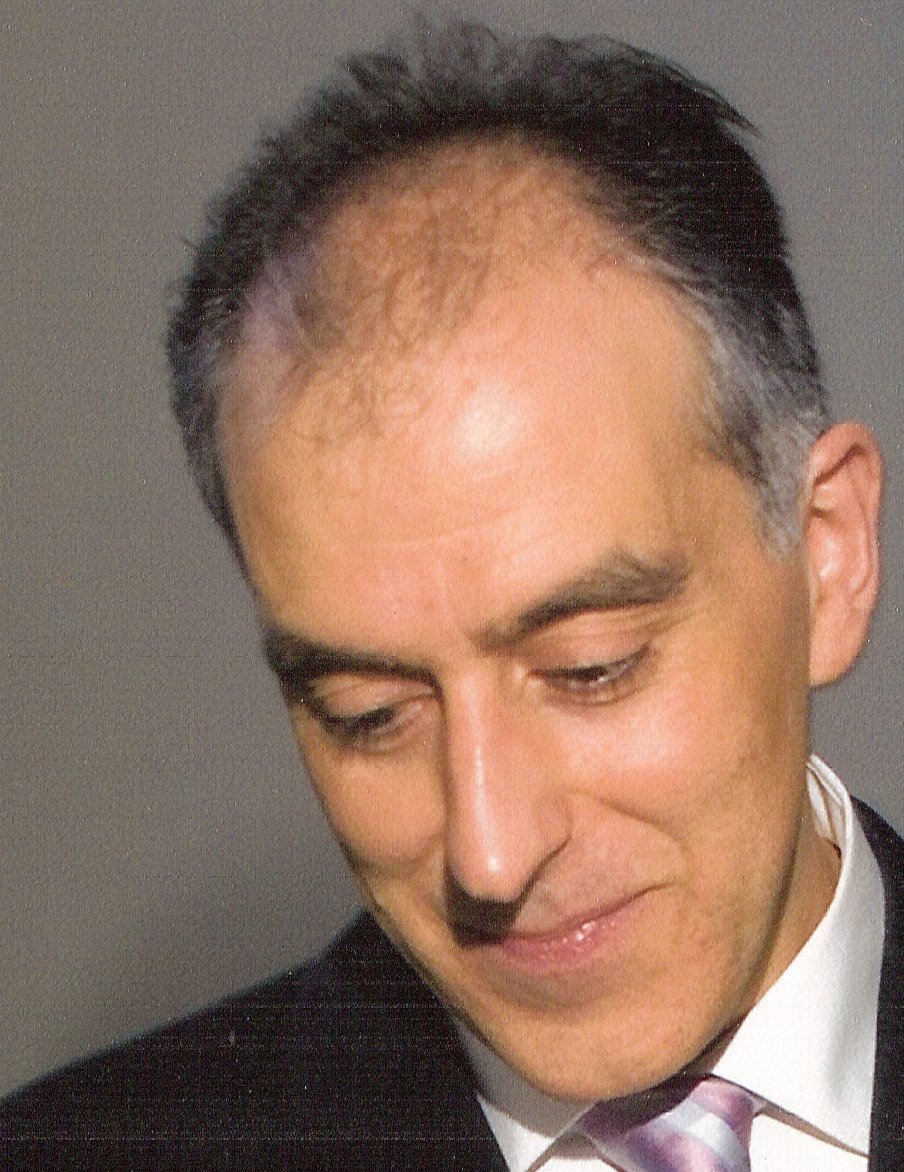
'One of the most prolific, versatile and, at his best, penetrating of our poets.' - Magma 30
biography
For interviews with Mario Petrucci, click here.
Mario's biography is complex, to say the least. Originally a Natural Sciences graduate,
he moved into freelance writing after a stint in science teaching, a PhD in optoelectronics at UCL, organic farming/goat-herding in Ireland, and a further BA
in Environmental Studies at Middlesex University. He was inaugural Royal Literary Fund Fellow at Oxford Brookes University
and (later) the Fellow at Westminster and Brunel Universities. Most recently, he became RLF Fellow at the City and Guilds of London Art School.
Mario's poetry performances attract international recognition (e.g., with the British Council and Poetry International),
and he has received many awards for his work. From 1991 to 2005, he was outright winner in 22 national and international open poetry competitions (with at least another 20 runners-up and thirds). He won the London Writers Competition a record four times, and was recipient of the 2002 Arvon/ Daily Telegraph
International Poetry Prize (for his Chernobyl poem, source text for an award-winning poetry film by Seventh Art Productions). Notably, he was commissioned to write Tales from the Bridge,
perhaps the world's largest 3D poetry soundscape: spanning London's Millennium Bridge for the 2012 Olympics, this was shortlisted for the coveted Ted Hughes Award.
Often sumptuous and lyrically contemplative, Mario's work can be described as a shifting eclectic mix of the confessional and the metaphysical.
His early poems dwelt on romantic involvements, on his family/childhood memories of London and Italy, particularly
war-related anecdotes or the subtle incongruences of Italian heritage playing out in an Anglophone education; but his juvenile creativity was equally stoked by an unshakeable sense of the spiritual nature of materiality
and an innate devotion to the life force. That said, he delighted too, in paradoxical fashion, in open-mic/performance-driven slapstick writing and humour,
in joyous vulgarities and harsh political satire. Enduring concerns in his oeuvre that hark back to his earliest output include: his immigrant family,
with its psychological and actual bereavements; the realities of warfare; romantic intensity; love/unlove; science, medical procedures, and the insights of quantum physics;
ecology, ecopoetics, the natural world under impossible strain; consciousness, mindfulness, the mysterious imperatives of Being.
Although this plural alertness persists throughout his work, it did later noticeably crystallise into extensively intense explorations of love-loss
and a more concerted, systematic neo-Modernist impetus that found ways to fully incorporate his ecological, metaphysical and concrete/spatial awarenesses.
This developmental trajectory was itself punctuated by major public commissions that led to in-depth literary/site-specific interactions with
key cultural organisations and locations, as well as a growing engagement
with the translation of watershed poets hailing from diverse cultures and literary eras.
Clearly, then, for all his distinctiveness, Mario is no writer of singular or habitual voice. The Warwick Review notes "the extraordinary variety of this poet: his scientific and political commitments, his sharply physical response to the world of the senses,
his unsentimental embrace of facts of life and behaviour". Prolific by any standard, his style and forms have enjoyed frequent ongoing shifts, driven by his evolutionary modernist instincts. Mario's intricate, heaving aesthetic landscape certainly resolves into at least one zenith
(after mid-2005) in the form of the epic i tulips project, an immense experimental undertaking of 1111 poems, terminating in a 1111-line coda in 11 sections. Praised by the Poetry Book Society as "a truly ambitious landmark body of work" (PBS Bulletin)
and endorsed by doyens Roy Fisher and Bill Berkson, i tulips not only lays claim to being one of the longest sequences ever composed, but also stimulates British prosody at a crucial juncture with a distinctively plural, sonically charged source of rich imagery moulded
into a freshly-minted family of strikingly visual, undulating forms (chiefly what the author terms 'bevelled tercets'); this irresistibly dynamic magnum opus culminates Mario's life-long endeavour, challenging English-speaking poetics to engage with its
"energetic fusion of American and British modernism" (Poetry International).
In 2003, Mario became the Poetry Book Society's first pamphlet selector (joined by Sian Hughes), responsible for early detection of such poets as Daljit Nagra and Frances Leviston.
A former chair of the Royal Literary Fund's Advisory Fellowship, with a significant history as a radio/tv broadcaster, he now works as an educator and creative writing tutor.
Co-founder of writers inc., he has taught widely in adult contexts and in schools, lecturing at the Imperial War Museum and much in demand as a visiting specialist in war poetry and the curriculum.
His poetry, short stories, articles and essays often overlap creativity, politics, science, ecology, and spirituality. He has engendered a host of resources linking the humanities and the sciences, not least in film and video
(e.g., at the Natural History Museum), or through science-writing projects and commissions (e.g., at the Southbank Library), or via his ingenious resource pack Creative Writing <--> Science.
He is a voice and performance mentor; the collaborative poetry group he co-founded, ShadoWork, swept the board in terms of awards, providing voice-training seminars and acclaimed performances across the UK.
Diorama (now lapsed) developed that impetus into experimental online multi-vocal and multimedia contexts for poetry. Among Mario's newest ventures is Writing Into Freedom, a free resource-centred
website and its sister YouTube channel; together, these supply an audiovisual feast of creative writing guidance, exposition and good practice.
'Imaginative, sophisticated and effortlessly masterful... draws on the nature of raw experience
Black Mountains / Rare Flowers : A New Track for Poetry?
'Reminiscent of e.e. cummings at his best', Mario Petrucci has generated an immense body of work that is 'vivid, generous and life-affirming' (Envoi).
Inspired by Black Mountain, his innovative poems embrace contemporary issues of searing social and personal relevance, but their chief characteristic is humanity, a profound ability to move us.
From the intimacies of love and loss, via the tragedy of Chernobyl, to i tulips with its 'modernist marvels' (Poetry Book Society),
Petrucci promises no less than 'Poetry on a geological scale… a new track for poets of witness' (Verse).
'The STAR of the festival for me - and anyone else (friends and strangers) I spoke to afterwards...
Mario Petrucci is a metaphysical and modernist poet of international standing, an ecologist, and PhD physicist. He is the only poet to have been resident at the Imperial War Museum and with BBC Radio 3, and has received major literary prizes across the board
(National Poetry Competition (3rd); four times winner of the London Writers competition; Bridport Prize (winner); New London Writers Award). His book-length poem on Chernobyl, Heavy Water (Enitharmon 2004), captured the prestigious Arvon Prize for poetry and forms
the backbone of a powerful award-winning film (Seventh Art Productions). His other volumes include Flowers of Sulphur (2007), i tulips (2010) and the waltz in my blood (2011). He has devised numerous courses for the Poetry School, the Poetry Society’s Poetryclass
initiative, and Arvon/Foyle Young Poets. Mario is something of a frontiersman in creative writing projects in the public domain, and is a major exponent of site-specific poetry: he has engaged successfully with a multitude of prominent cultural institutions,
including the various Imperial War Museum sites, delivering commissioned poems, books, and groundbreaking writing packs that tie into science (The Royal Society; the Royal Literary Fund) and ecology (Poetry Society). His remarkable poetry soundscape Tales from the Bridge
was a centrepiece of the capital's 2012 Cultural Olympiad; with an estimated 4 million listeners, it was shortlisted for the 2012 Ted Hughes Award for New Poetry. Mario lives in north London. For a supplementary CV, click here
and revives it in an incredibly accurate, poignant way.' - Cambridge Student
[Wenlock Poetry Festival, 2011]
Packed out, extra chairs, so intelligent, fabulously throwing himself in to the performance. WOW !!!!!!'
[participant feedback, 2011]
SUMMARY [write-up for events/ readings]
FURTHER INFORMATION
& BOOKINGS
 GHigh P1140045.jpg)
 by Graham High 2.jpg)
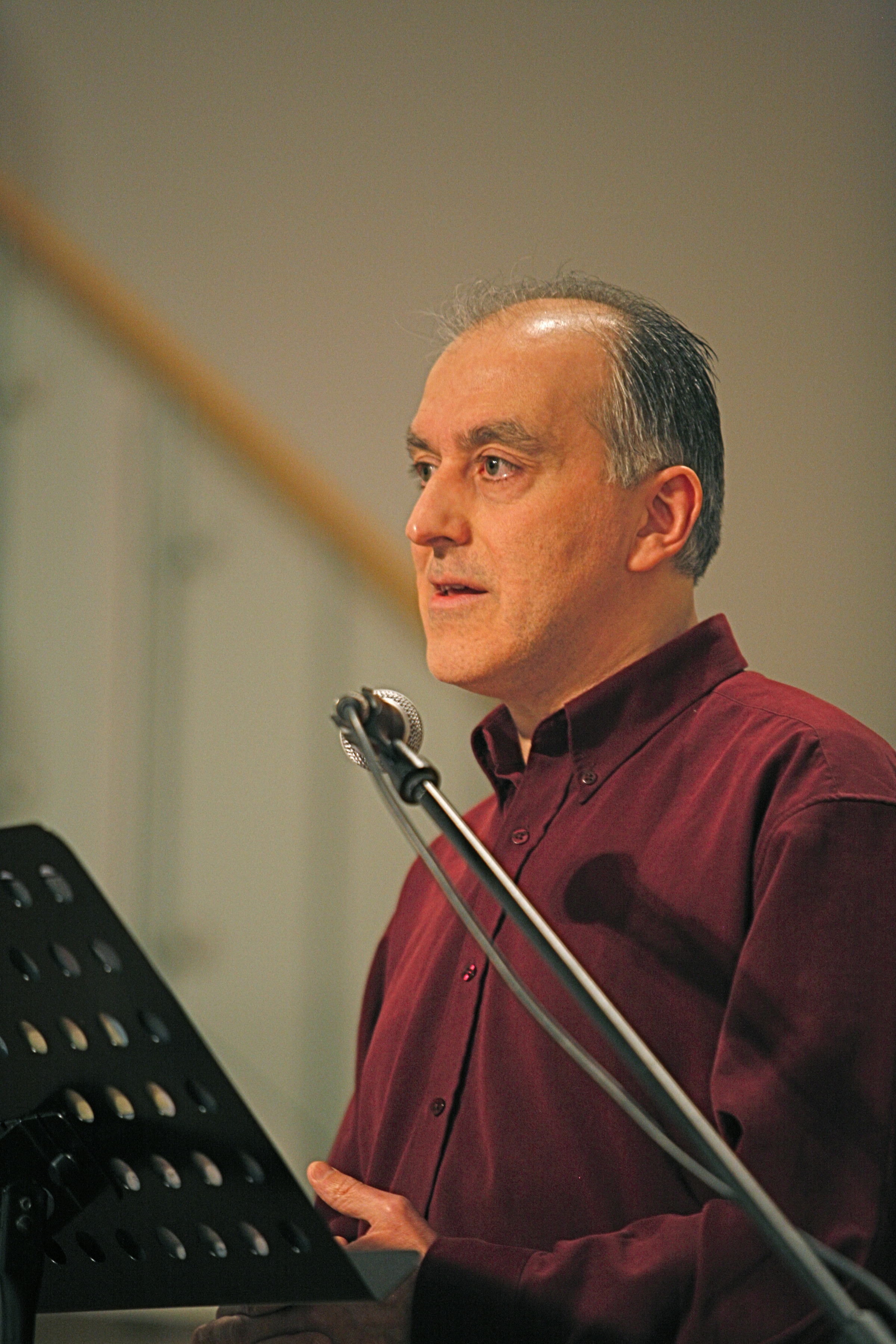
[Left]
High resolution image [300 dpi]
[credit: Barry Hobson 2011]
[Near right / middle right]
Bust by Graham High (2013)
[clay work in progress / finished bronze]
copyright - Graham High: by kind permission
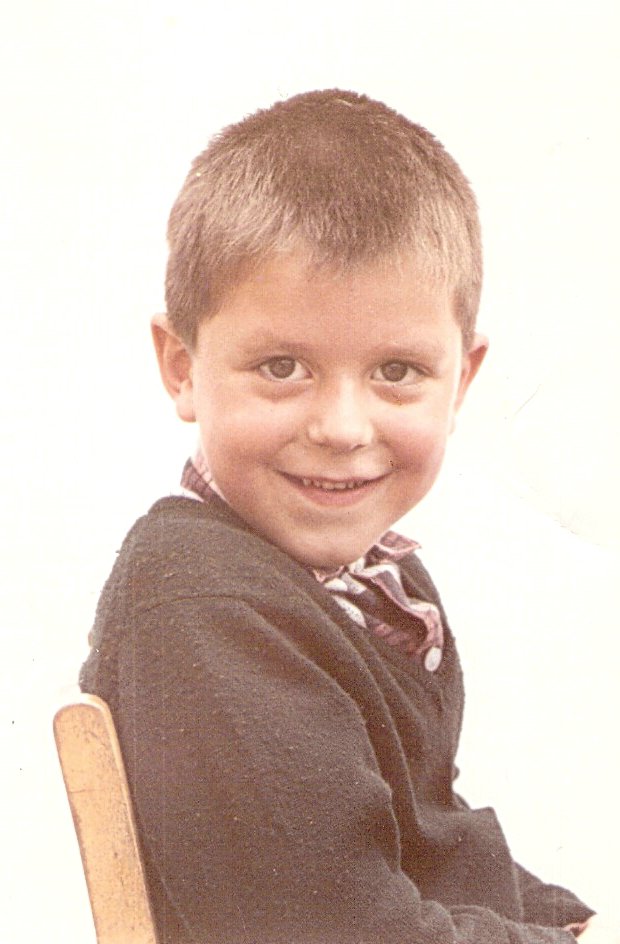
[Far right]
Mario, aged 4 yrs
copyright mario petrucci 2001